Supporting Children’s Development as Casual Childcare Staff
In the realm of early childhood education, the role of casual childcare staff is both vital and multifaceted. These professionals play a significant part in nurturing and guiding young minds during their formative years. Understanding how to support children’s development effectively can make a profound difference in their growth. This article outlines key strategies and methodologies casual childcare staff can employ to enhance the developmental journey of children in their care.
The Importance of Engaging with Children
Engagement is a cornerstone of effective childcare. Casual childcare staff can create profound impacts by fostering an environment where children feel valued and heard. Engagement involves more than just supervising activities; it requires active participation and interaction.
Strategies for Effective Engagement
- Active Listening: Pay full attention to children when they speak, showing empathy and understanding.
- Ask Open-Ended Questions: Encourage children to think critically and express themselves more comprehensively.
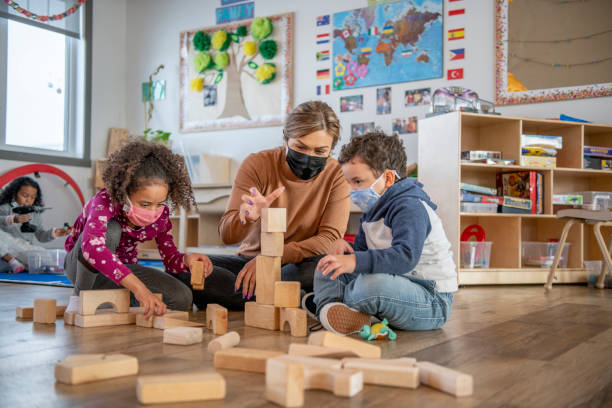
- Participate in Play: Join children in their activities to understand their interests and perspectives better.
By incorporating these strategies, casual childcare staff can create a supportive and nurturing environment that promotes healthy development and learning.
Facilitating Social Development
Social skills are crucial for children’s overall development, influencing their ability to form relationships and navigate various social contexts. Casual childcare staff can play a pivotal role in this aspect of development.
Promoting Positive Social Interactions
- Modeling Appropriate Behavior: Demonstrate positive interactions and communication skills.
- Organizing Group Activities: Facilitate activities that require collaboration and teamwork.
- Encouraging Empathy: Teach children to understand and respect others’ feelings and perspectives.
Effective social development is foundational to a child’s ability to thrive both in and out of educational settings. For more insights on the role of casual childcare staff, consider exploring additional resources.
Cognitive and Language Development
Supporting cognitive and language development involves providing children with opportunities to explore, question, and express themselves. Casual childcare staff can implement various techniques to foster these areas of development.
Encouraging Cognitive Growth
- Interactive Storytelling: Engage children with stories that stimulate imagination and comprehension skills.
- Puzzle and Problem-Solving Games: Introduce activities that require logical thinking and reasoning.
- Exploratory Play: Allow children to experiment and discover through play-based learning.
Language development is closely linked to cognitive growth, and it is crucial to provide a rich linguistic environment. This can be achieved by consistently introducing new vocabulary and encouraging children to express themselves.
Conclusion
Casual childcare staff have a unique opportunity to shape young minds in the most critical years of development. By focusing on engagement, social skills, cognitive growth, and language development, these professionals contribute significantly to the holistic growth of children. Whether through direct interaction or structured activities, every moment spent with a child is an opportunity to foster a positive learning experience. For those interested in learning more about the dynamic role of casual childcare providers, further exploration into the topic can provide valuable insights and techniques.